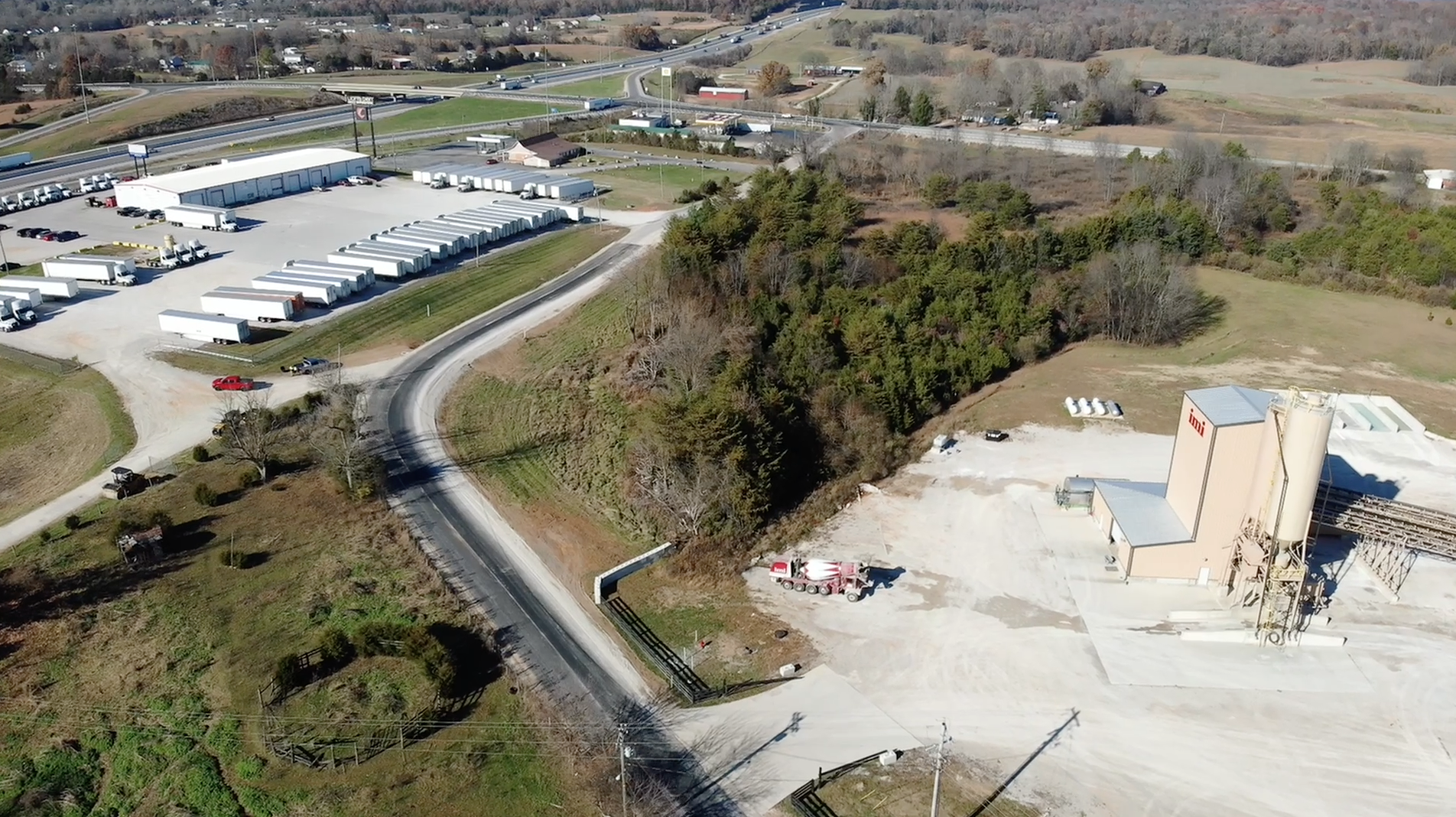
Right along I-65 is a small, easy-to-miss strip of LaRue County. Yet, the LaRue County Judge/Executive and local magistrates view that stretch as a critical opportunity worthy of investment.
Weldon Loop Road is located in the Upton community and is a 2.89 mile stretch of roadway. Weldon Loop Road is heavily used by large-scale industrial and farm vehicles.
“As this area of the county continues to grow with new industry, it became more apparent that we have to address the deteriorating state of Weldon Loop Road for residents and potential industry alike,” said LaRue County Judge/Executive Blake Durrett.
Judge Durrett had previously negotiated with SRM Materials, a new quarry on Watkins Alvey Road, to upgrade Watkins Alvey Road to a 22-foot paved surface to support their industrial transportation. However, Weldon Loop Road continued to deteriorate under the increased heavy loads.
“We know that the increased tax roll, the new jobs, and the new domestic product associated with growing industry was important to LaRue County,” Durrett said. “But we also recognized that we must invest in our infrastructure to support this growth and the residents in the area.”
Judge Durrett turned to Lincoln Trail Area Development District (LTADD) Engineering with an innovative approach for the necessary maintenance and the best course of action for the Weldon Loop Road upgrades.
Finding an Innovative Solution
Engineering Director Charlie Allen met with LaRue County representatives to better understand the project goals and unique restrictions.
“Judge Durrett outlined the needs for the project and clearly stated his expectations: to widen the road to 22 feet to accommodate heavy loads, keep the road in service during construction, and not change the road’s elevation to avoid added costs,” said Allen. “From there, we began preliminary planning and exploration to ensure the project would be shovel-ready when funding was made available.”
Allen created alignment and plan sheets for the project to widen the lanes to 11-feet and add two feet of rock shoulder to each side of the road. Allen incorporated Judge Durrett’s recommendation to use cement stabilization for full-depth reclamation (FDR). This is a cost-effective process regularly used by the Kentucky Transportation Cabinet for federal and state highways, but it is relatively new for county roads.
What is Cement Stabilization for FDR?
This process uses the existing asphalt and underlying base material, mixed with cement and water, to create a new base layer with strong structural integrity. It eliminates the high costs associated with hauling in new rock, pulverizing the existing pavement and subgrade in place. The material is then compacted and prepped for a new surface layer like asphalt.
LTADD Engineering also created computer-aided design (CAD) detailing the project. “Our goal was to be project-ready when funding was available,” Allen said.