LTADD hosts 2026 KAMM Regional Training (Region II)
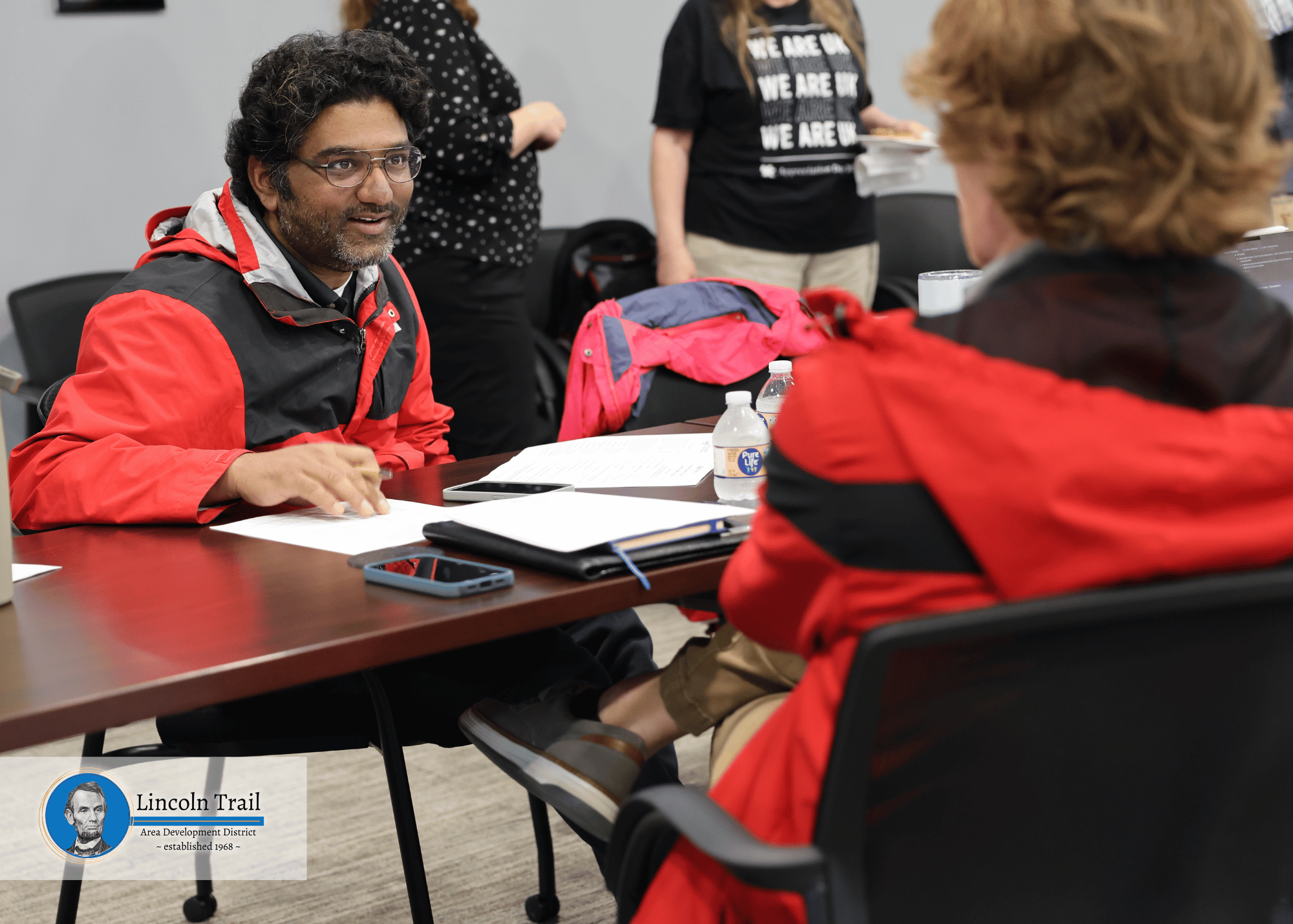
Flood risk, stormwater management, and climate resilience are complex, evolving issues. To keep Kentucky communities safe and prepared, we need constant learning and collaboration. Lincoln Trail Area Development District (LTADD) recently hosted the 2026 Kentucky Association of Mitigation Managers (KAMM) Regional Training for Region II in Elizabethtown.
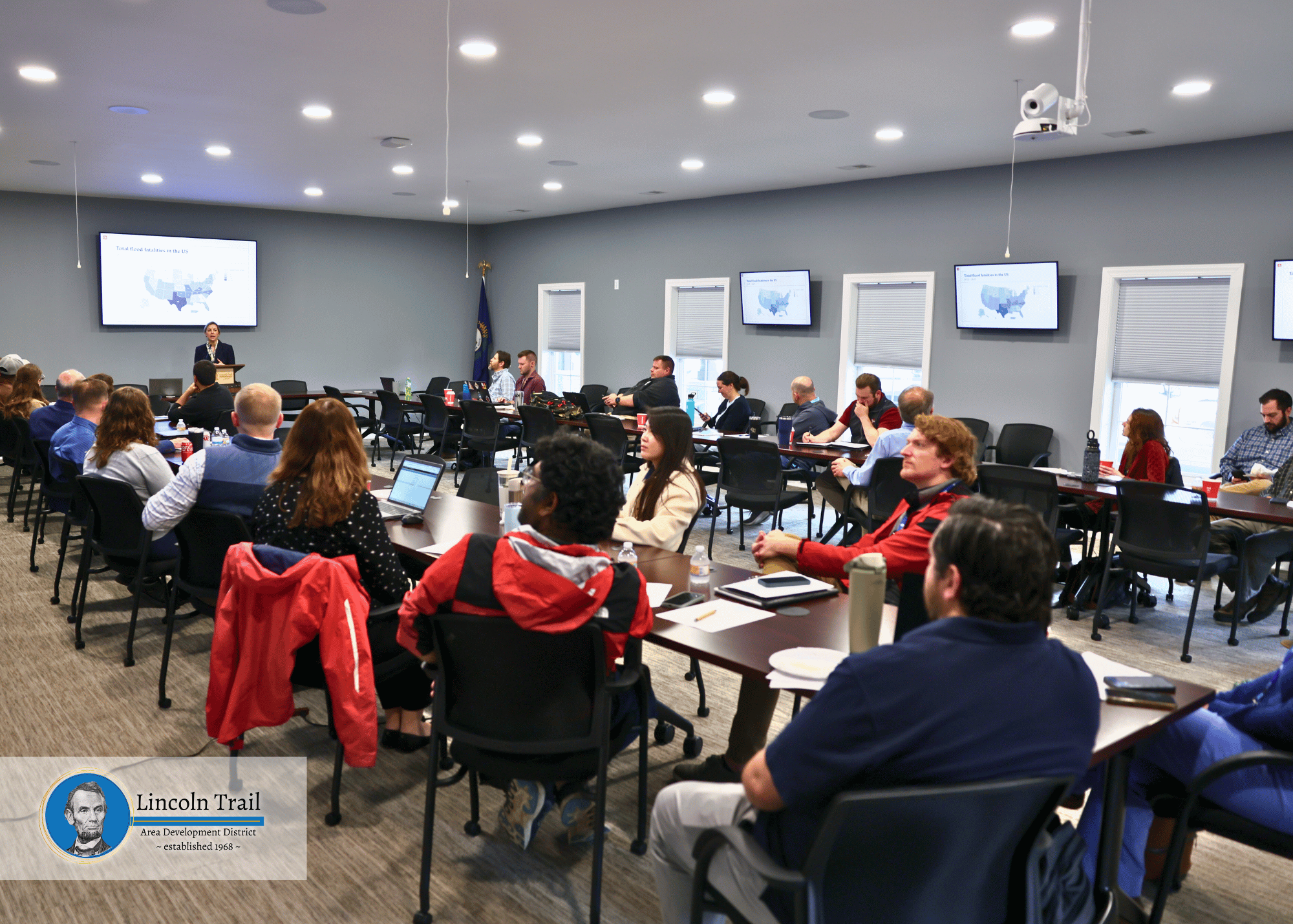
The training assembled experts, local leaders, and dedicated professionals to share knowledge and discuss innovative solutions that promote natural hazard mitigation and management in Kentucky.
Here’s a breakdown of the key topics and expert speakers featured in the training:
Morning Session: Mutual Aid & Leading-Edge Technology
The morning kicked off with crucial practical updates. Peter Goodmann from Louisville Water Company discussed KY WARN, a vital mutual aid program that allows water and wastewater utilities to share emergency resources statewide. Seeing how this collaborative response functions is a great reminder of the power of partnership.
Presentations included:
- Stormwater Grate Safety: David Johnson, PE, and Jacquelyn Quarles from Louisville MSD presented a sober and necessary case study on stormwater grates. They walked through a specific fatality event in Louisville, detailing the engineering implications, legal outcomes, and MSD’s updated guidance for next steps.
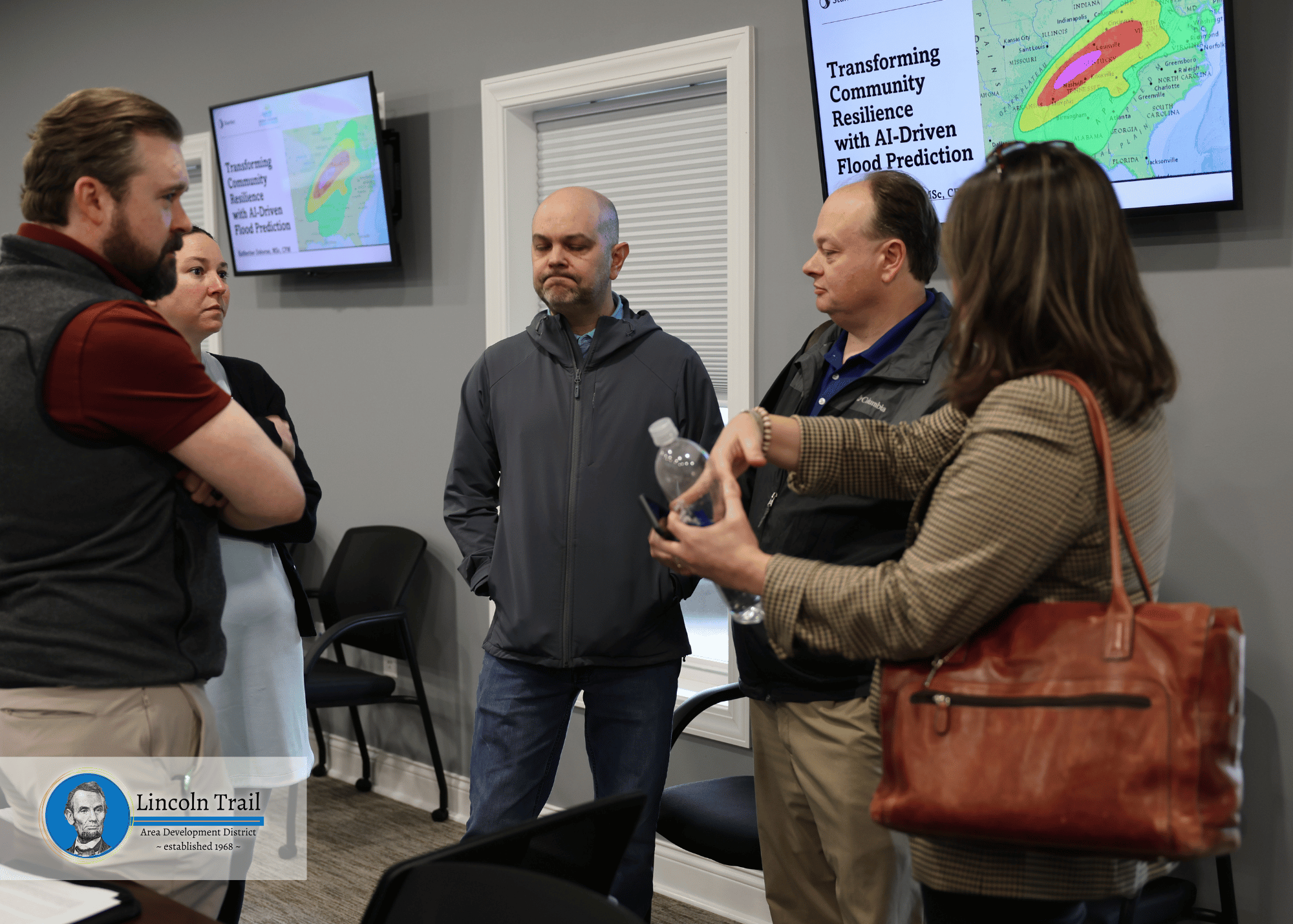
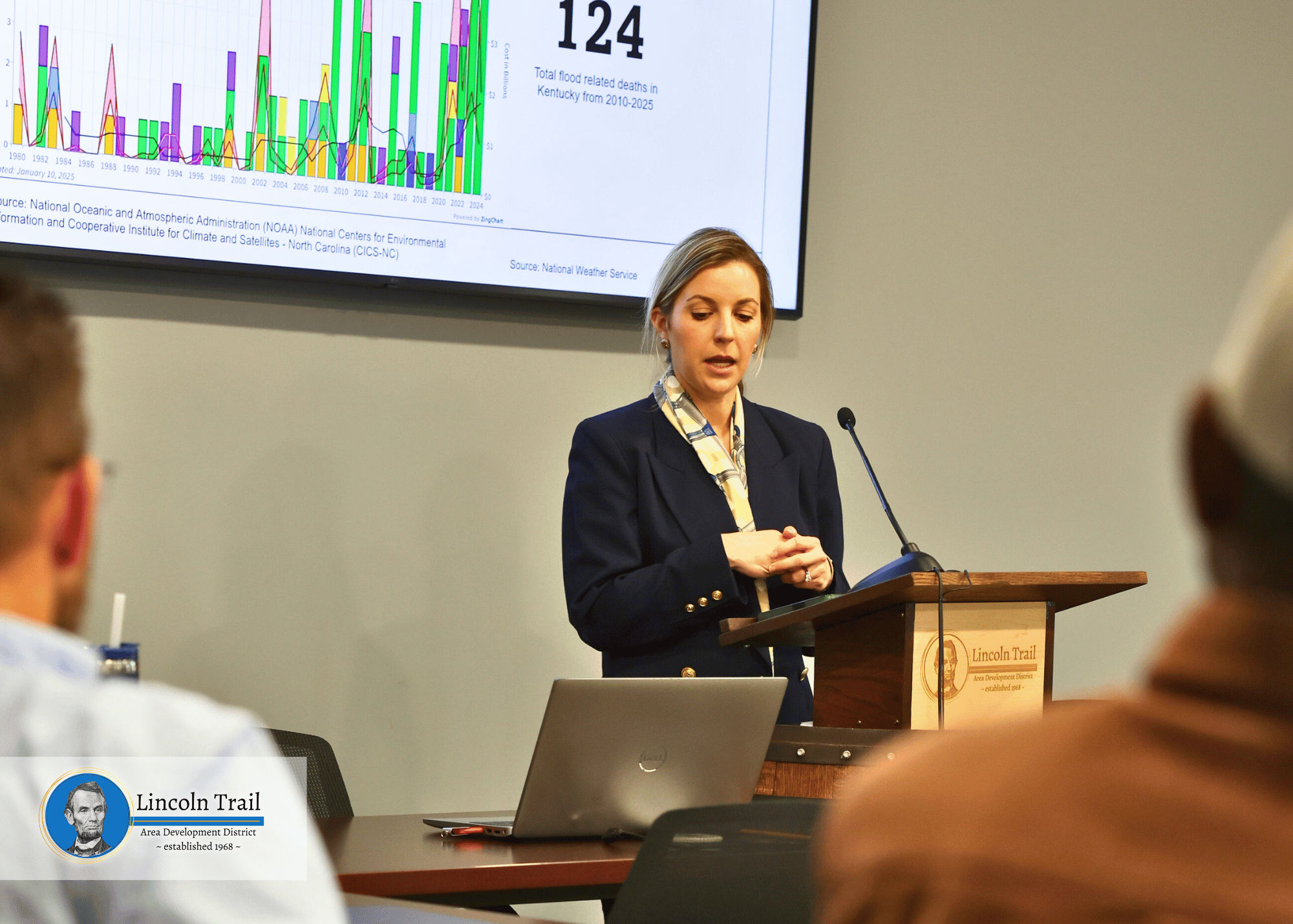
- AI-Driven Flood Prediction: The power of AI is coming to flood management. Katherine Osborne of Stantec shared how emerging technologies, including remote sensing and machine learning, are filling data gaps for local decision-making. This technology provides accurate, near-real-time flood hazard data, helping communities prepare better before, during, and after a storm.
- Wastewater & Climate Risk: The morning concluded with a fascinating talk on the Arcadis Climate Risk Nexus – MSD Pilot Project, presented by Danette Kinaszczuk and Yalda Mikhak of Arcadis. This digital platform translates complex climate science into clear insights, allowing utilities like MSD to assess risk to critical wastewater and flood protection infrastructure. It’s a powerful tool for prioritizing investment and strengthening resilience.
A Powerful “Working Lunch”
The afternoon started with a potent reminder of why our work is so critical. The lunch session featured a video screening of the Mayfield EF4 Tornado Horror in Kentucky. Witnessing the real-world impact of extreme events reinforces the urgency of our shared mission to mitigate disaster and protect our communities.
Afternoon Session: Joint Planning & Research
The afternoon focused on strategies and in-depth scientific research.
- Integrated Watershed Planning: The connected nature of water resources means our planning efforts must also be connected. Haileigh Arnold from the Kentucky Division of Water (KY DOW) presented on “Joint Planning for Team Kentucky.” She discussed the overlap between Hazard Mitigation Plans (HMP) and Watershed-Based Plans (WBP) and explained how to use newly revised EPA guidelines to create effective Integrated Watershed Plans.
- Sediment & Headwater Flooding: We heard two expert presentations from Dr. Tyler Mahoney of the University of Louisville, who is at the forefront of hydrologic monitoring and modeling:
- Sediment Fingerprinting: Dr. Mahoney discussed a study tracing sediment sources at the confluence of Limestone Creek and the Ohio River in Maysville, KY. This important research identifies the dominant sources of sediment to better manage water quality degradation and flood capacity reduction.
- CLIMBS and FLASH Projects: These National Science Foundation-funded projects aim to improve flood risk prediction in Kentucky’s headwater streams. Dr. Mahoney explained the research into when, where, and why flooding occurs in small headwaters and how that contributes to downstream flooding, complete with details on installed sensor networks and community engagement.
The 2026 KAMM Regional Training (Region II) was a day filled with incredible insights, powerful practical examples, and forward-looking research. Thank you to everyone who came together to support Kentucky’s resilience and a special thank you to Region 2 KAMM Representative J.P Carsone who helped make this event happen.